Separate the equipment responsibilities
If the landlord cares for some units and the tenant cares for others, identify that division before agreeing to a plan. Confirm exactly which equipment you want us to assess.
 (850) 862-4796 Request service
Your building may have one unit serving the whole business or several systems serving different occupied areas. We offer commercial HVAC maintenance in Baker, starting with a site review so the proposed care reflects your equipment and how you use the space.
If you manage the property, a tenant suite or the business itself, bring us the equipment information and service records you already have. We can discuss the units that need review, who can authorize their care and the access arrangements needed for the work.
Safety comes first. For fire, smoke, suspected gas or a carbon-monoxide alarm, leave the building and seek emergency or utility help from outside. Do not wait for maintenance. Leave roof access, open equipment, wiring, refrigerant, moving parts and safety-control work to qualified professionals. Share existing records rather than opening panels or climbing to identify a unit.
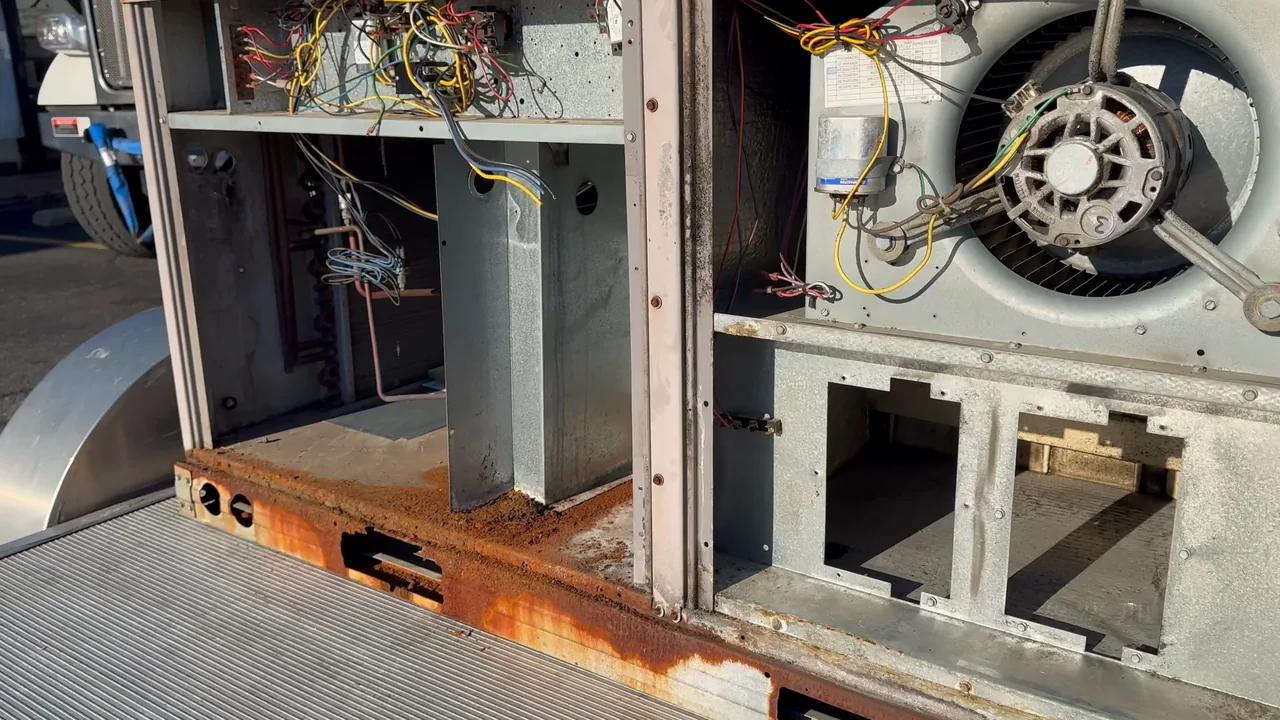
Commercial HVAC maintenance starts with identifying the equipment, reviewing its condition and operation, and defining the covered tasks. Inspections, filter care, safety-control checks and performance checks may be appropriate. The plan's equipment, schedule and terms need agreement with our team. A current heating or cooling fault needs its own service discussion rather than waiting for routine care.
A maintenance list is more useful when each unit is connected to the space it serves. Tell us whether your commercial heating and cooling includes air conditioning, furnace heating or heat pumps. If existing records have unit labels, model information or locations, share those records. You do not need to identify equipment by entering restricted areas.
Describe the building's use alongside that list. A front counter, shared office and back work area may have different occupied hours. Tell us which areas are open to staff or customers, which are seldom used, and whether tenants share a system. Changes in occupancy or room use are helpful context for our review.
If the landlord cares for some units and the tenant cares for others, identify that division before agreeing to a plan. Confirm exactly which equipment you want us to assess.
For a wider discussion of equipment and work coordination, see our Baker commercial HVAC services.
We begin with an on-site review of the equipment, building layout and usage patterns. The findings guide the proposed maintenance. Ask which units are covered, what will be checked on each one and which tasks depend on its condition or design. A single description should not leave you guessing whether every system is included.
Proposed care may include component inspections, filter cleaning or replacement, safety-control checks, and review of airflow, temperature output and cycling. Suitable minor adjustments or repairs may also be part of the agreed work. Confirm the actual inclusions instead of treating that list as a checklist for every visit.
Equipment use, age and condition help shape the recommended schedule. Ask about the proposed frequency and current terms for your property. Do not assume a set visit count or that a residential maintenance arrangement covers commercial units.
Tell us who can provide access and who has authority to approve work. These may be different people. A property manager may approve the proposal while a tenant or site contact manages entry. Let us know about locked mechanical areas, roof-access restrictions, security procedures and any requirements for working around occupied rooms.
Share the business's occupied hours and periods when particular spaces are in use. Ask which parts of the proposed work could require equipment to be stopped, how affected occupants should be informed and whether access must be coordinated with another contractor. Discuss the practical arrangements directly with our team before work is agreed.
Choose someone who can receive findings and decide about additional work. Provide a separate on-site contact when needed, so an access question does not become an unanswered approval question.
If a space is already too warm, the heating is not working or a unit repeatedly stops, tell us when you first contact us. Note the affected area, the time the problem occurs and whether other zones still work normally. These observations help explain the concern without asking anyone on site to diagnose equipment.
Maintenance can bring a concern to light, but finding it is not the same as authorizing a repair. Ask what was observed, whether further diagnosis is needed and whether the recommended work is covered or separate. Replacement is another decision, informed by condition, service history and the space's needs, not an automatic part of maintenance.
Ask for clarity on routine care, any suitable minor work already included and further repairs needing approval. Confirm who may authorize that next step before it is undertaken.
For an active cooling problem, read about commercial AC service in Baker and describe the fault when you contact us.
Keep the agreed equipment list with your service records. Ask how completed work, observations and recommended follow-up will be explained. Connecting those notes to a unit and the area it serves makes the next conversation clearer, especially when a manager, tenant or maintenance contact changes.
Tell us when operating hours, tenants, room use or equipment change. A plan based on the previous layout may need another discussion. If the concern involves schedules or controls, distinguish a maintenance check from a proposed upgrade. Existing equipment and control compatibility need assessment before any change is recommended.
For changes beyond routine care, explore commercial HVAC controls and upgrades in Baker and share the equipment and operating requirements you want reviewed.
To discuss the care your property needs, contact our Crestview team.
Yes. We offer commercial HVAC maintenance for Baker properties, beginning with equipment and site review. Share the address, building use and units involved so we can confirm the appropriate scope, current terms and availability for your property.
It may cover equipment inspections, filter care, safety-control checks, airflow, temperature output, cycling and suitable minor adjustments or repairs. Confirm the covered units and tasks with us. Further diagnosis, repair or replacement may need separate approval.
The schedule depends on the equipment's use, age, condition and operating demands. Our site review helps shape the recommendation. Ask about frequency and current terms rather than assuming a fixed number of visits applies to every building.
Yes. Share the equipment list you have and explain which occupied areas each unit serves. Identify any split between landlord and tenant responsibilities. Confirm which units will be assessed and covered; several units at one address are not automatically one agreed scope.
No. Describe the heating or cooling fault when you contact us so we can discuss the appropriate service. It may need separate diagnosis or repair. For fire, smoke, suspected gas or a carbon-monoxide alarm, leave and seek emergency or utility help from outside.
Have the property address, known equipment information, service records and affected areas ready. Tell us about occupied hours, restricted access, the on-site contact and who approves work. Use records you already have rather than opening equipment or accessing a roof.
Let's talk about a practical care plan for your business. Mills Heating & Air serves Baker through our Crestview location at 1455 S Ferdon Blvd a2, Crestview, FL 32536. Call (850) 862-4796 with your property and equipment details to confirm scope and current availability.
Have a question about your AC or heat? Planning a new system? Give the Mills crew a call and let’s talk about your Crestview home or business.