Home changes
Mention an addition, changed room use or insulation work so the assessment reflects the home you have now.
 (850) 862-4796 Request service
Choose the system for both sides of your year.
A replacement decision often begins with one frustrating season. Perhaps cooling has become unreliable, or the house feels uneven when you need heat. Before choosing equipment, bring both experiences into the conversation so the project addresses how you actually use your home.
Safety comes first. Leave wiring, refrigerant connections, internal panels and safety controls to qualified professionals. Do not reset or bypass equipment or approach wet electrical components. If you suspect gas, see smoke or fire, or hear a carbon monoxide alarm, leave and call 911 from a safe place. During suspected gas leakage, do not use switches, phones or flames inside. Stay out until emergency responders say it is safe to return.
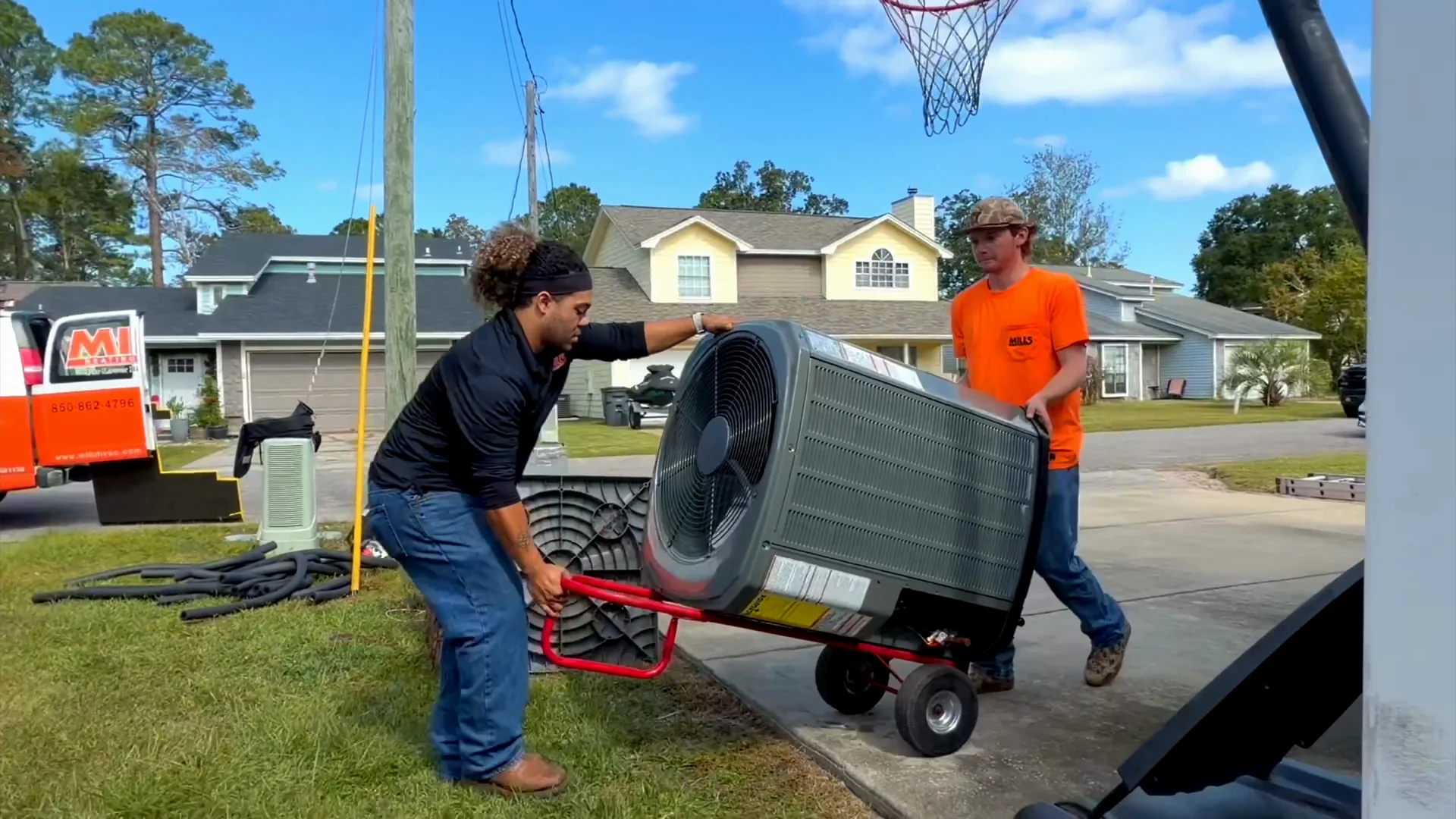
For heat pump installation or replacement at your Baker, Florida home, call Mills Heating & Air at (850) 862-4796. Our crew can discuss your property, heating and cooling needs, and the proposed equipment and installation scope. Share your address so we can confirm the work you need and discuss timing for your home.
An air-source heat pump moves heat rather than creating heat by burning fuel. In cooling mode it carries heat out of your home. In heating mode it brings heat indoors from the outdoor air. That makes the choice more than a cooling-equipment purchase: the system needs to suit your home in both modes.
For your Baker home, describe warm-weather comfort separately from cooler-weather comfort. A bedroom that feels clammy during cooling may raise different questions from a living room that stays cool in heating. Florida's cooling needs matter, but they should not make the heating side of the proposal an afterthought.
Tell us which spaces you use most, when discomfort occurs and whether the home has changed since the existing equipment was selected. You can share these observations from occupied rooms without investigating equipment or hidden spaces.
The old unit's capacity is background information, not the whole answer. A heating and cooling load calculation estimates what your home requires. Size, insulation, windows and the way the house is arranged belong in that assessment. Ask what information was used and how the recommended equipment responds to the needs identified.
A larger unit is not a dependable shortcut for an uncomfortable room. Airflow, ducts or the home itself may contribute to that problem. The useful question is what the proposed project addresses and what remains outside its scope.
Mention an addition, changed room use or insulation work so the assessment reflects the home you have now.
Ask how the selection accounts for heating as well as cooling, rather than relying on room count alone.
For a split-system proposal, discuss the outdoor unit, indoor equipment, airflow and controls together. Replacing one visible cabinet does not answer whether the remaining setup is suitable. Have our crew explain the intended combination and identify which existing components are being retained.
Outdoor placement also deserves a conversation. Ask how the proposed location relates to nearby windows, equipment sound and access for service. A site-specific explanation is more useful than assuming the old position is automatically the best one.
Ask how the indoor equipment and existing ducts will support the proposed system, and whether changes are included.
Confirm whether your thermostat stays or changes and how it will control heating and cooling.
If supplemental heat is proposed, ask when it is intended to operate and how the controls will manage it.
Compare the whole installation, not just the equipment name or a single efficiency rating. Heat pumps have separate cooling and heating ratings. Ask for the current ratings of the proposed setup and an explanation of the choices. Ratings help compare equipment, but they do not predict your household's bills or promise a particular comfort result.
You should also be able to tell what work is included. Ask about removal of existing equipment, indoor and outdoor connections, controls, any proposed duct or electrical changes, and responsibility for applicable permit steps. Those questions define the project; they do not mean every item is automatically necessary or included.
Separate the equipment being supplied from the supporting changes needed for your home.
Resolve assumptions about retained components before approving the proposal, especially when comparing different scopes.
A heat pump that has a fault does not automatically need replacing. Before committing to a two-season equipment plan, distinguish a repairable problem from reasons to reconsider the system as a whole. Past service records and your comfort observations can help frame that discussion.
If equipment is malfunctioning, ask what has been diagnosed. A symptom alone does not establish whether repair or replacement makes sense.
Identify whether you need dependable operation, a different heating and cooling setup, or attention to an ongoing room-comfort problem.
Review a repair path alongside the proposed installation where appropriate. Include the supporting work, not only the outdoor equipment.
If your immediate concern is a malfunction rather than a new equipment plan, our heat pump repair information for Baker homes explains the diagnosis-first conversation that can help you decide whether replacement deserves consideration.
As the agreed installation is completed and the system is tested, ask our crew to explain its everyday operation. You should understand how to select heating and cooling, what any supplemental-heat indication means for this setup, and which instructions belong to your equipment. Keep the equipment information and operating guidance with your household service records.
Ask which ongoing care is appropriate and which tasks require a professional. After installation, describe concerns from normal living spaces: the room affected, the operating mode and when you noticed the change. You do not need to open equipment to give us useful information.
When you are planning ongoing care for heating and cooling equipment, our Baker residential maintenance information can help you frame questions about professional service for your setup, separately from the installation work.
To discuss your home's equipment plan, use our Mills contact form with your Baker address and a short description of your heating and cooling priorities.
Yes. Tell us what currently heats and cools your home and what you want to change. A heat-pump proposal needs to explain how it will serve both needs, which existing equipment would stay and which connections or controls would change. Compatibility needs assessment, not an assumption based on the outdoor space.
Not automatically. An addition changes the information used to assess the home, but capacity is only part of the question. Ask how the added space affects the heating and cooling load and the distribution of air. The assessment should explain the proposed response rather than simply increasing the old unit size.
It may be relevant, but new equipment alone is not a guaranteed fix. Equipment operation, airflow and ducts can contribute to moisture and room-comfort concerns. Describe when the damp feeling occurs and ask which causes the proposed work addresses. Do not approve a larger system solely on that symptom.
That depends on its compatibility with the proposed equipment and controls. Ask whether it can manage the intended heating and cooling operation and any included supplemental heat. If it is being replaced, have the proposal identify that change and ask for an operating explanation at handoff.
Ask for the current heating and cooling ratings and confirm what equipment combination each proposal describes. Then compare capacity, controls and installation scope as well. A higher rating is not a household savings estimate, and two proposals may include different supporting work even when their equipment looks similar.
Start with your property address, the equipment information already in your records and separate notes about heating and cooling comfort. Mention recent changes to the house and what matters most to you. No panel removal, attic visit or equipment testing is needed before you contact our crew.
Let's talk through a heat-pump plan you understand. Call Mills Heating & Air at (850) 862-4796 with your Baker home details. Our Crestview address is 1455 S Ferdon Blvd a2, Crestview, FL 32536.
Have a question about your AC or heat? Planning a new system? Give the Mills crew a call and let’s talk about your Crestview home or business.