Name the affected zone
Use room names, suite numbers or existing equipment tags so the site contact and our crew are talking about the same area.
 (850) 862-4796 Request service
A cold customer area and a cold back office may point to different heating problems. Tell us which spaces are affected so we can start with the equipment serving them.
At Mills Heating & Air, we offer commercial furnace repair, installation and replacement for Baker properties. We work from your heating concerns, the equipment and how the building is used, rather than assuming every no-heat call needs a new furnace.
Safety comes first. For smoke, fire or a carbon-monoxide alarm, get everyone outside and call 911 from a safe location. For suspected gas, leave immediately and call 911 or the gas utility from outside. Do not use switches, phones or flames inside if gas is suspected. Do not re-enter until responders say it is safe. Never bypass safety controls, repeatedly reset a furnace, relight a pilot, open panels or climb onto a roof to investigate.
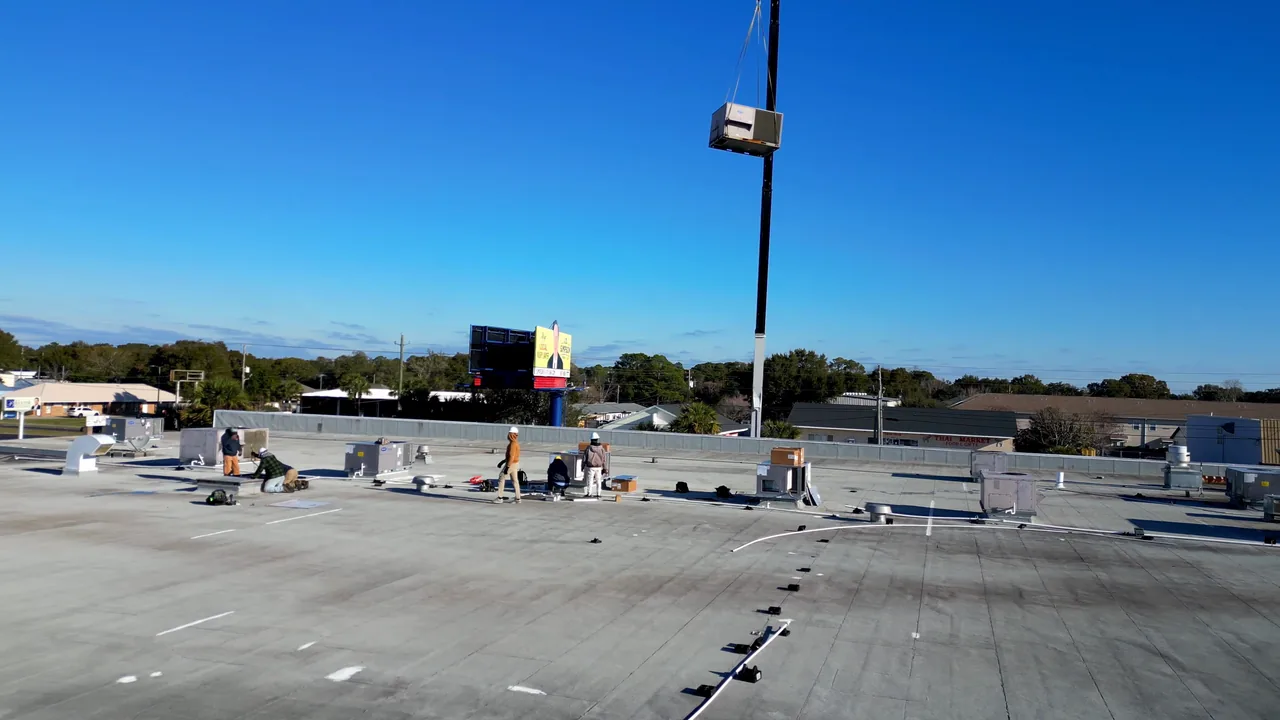
For a commercial furnace problem, share the property address, affected rooms or zones and any equipment records you already have. We can confirm the appropriate furnace scope and current availability, then discuss assessment, access and who can approve the work.
Start with a simple description of the occupied areas. Is the reception space cold while nearby offices feel normal? Does the complaint begin at opening, after a schedule change or throughout the day? These details help us understand the heating pattern without asking you to diagnose it.
In a multi-tenant property, identify the suite and any shared areas. Tell us whether one system serves several spaces or each tenant has separate equipment, if you know. A recent partition change or different operating hours belongs in the conversation too.
Use room names, suite numbers or existing equipment tags so the site contact and our crew are talking about the same area.
Note lost heat, weaker airflow, unusual cycling or a new sound. Report observations without opening equipment or testing it repeatedly.
A furnace heats air for distribution through ducts. A building with heating and cooling may instead use a heat pump, and a rooftop cabinet's appearance alone does not establish which heating equipment is inside. Existing asset lists, manuals or previous service reports can help identify it safely.
Our furnace assessment can consider airflow, filters, controls and moving components, along with ignition components where applicable. A cold room or frequent cycling is a symptom, not proof of one failed part. Share information already available from ordinary occupied areas; leave roof access, panels and electrical or fuel work to qualified professionals.
If your equipment provides both seasons through a heat pump, read our commercial heat-pump guidance for Baker properties to start with the right system discussion.
Repair is worth discussing when there is a defined fault and the furnace otherwise suits the space. Ask which component needs attention, what condition the rest of the equipment is in and whether related airflow or control issues need separate work. Parts availability belongs in that discussion.
Replacement deserves comparison when failures recur, condition is poor or the existing furnace no longer suits the occupied areas. Age alone does not settle the choice. We want the proposal to reflect today's layout and heating needs, not simply repeat the old equipment's size.
Ask how each option addresses the reported problem. If only one suite is cold, replacing a furnace without reviewing distribution and controls may leave the underlying concern unaddressed.
For a new or replacement furnace, our discussion starts with the property's heating needs and suitable equipment selection. The proposal should explain what work is included and where another responsibility or authorization begins.
Ask which furnace is proposed and what existing ductwork, controls and electrical connections it will use. Discuss any connection changes needed for that selection.
Clarify removal of old equipment, site preparation and disposal. Ask whether access equipment or work by other trades is needed. Engineering, roof work and permit responsibilities should be addressed, not assumed to be included.
Ask how operation will be checked and how the controls will be explained to the responsible site contact. Clarify cleanup and any remaining work before approving the project.
Tell us who can admit the crew, unlock equipment areas and approve work. For leased space, the person reporting the problem may not be authorized to change shared equipment. Bring the owner or property manager into the discussion when that authority is needed.
Explain normal occupied hours and any access restrictions. Discuss where equipment removal or delivery would pass through the property and who will notify tenants. Ask about expected heating interruptions and how the proposed work sequence relates to occupied spaces. Timing and available arrangements need direct agreement with our team.
Use our local Contact page for the next step, or call to discuss your property's heating concerns.
Keep the agreed scope, equipment identification and service findings with the building's records. Make sure the responsible contact understands which controls serve which spaces and which concerns still need attention.
Routine care and repair authorization are different discussions. If you want ongoing furnace care, ask which equipment and tasks would be covered. Do not assume a maintenance arrangement includes replacement parts or every repair.
Our commercial HVAC maintenance guidance for Baker explains the site-review and covered-care questions to bring to that conversation.
Yes. We offer commercial furnace repair, installation and replacement for Baker properties. Give us the address, equipment information and heating concern so we can confirm the appropriate scope and current availability.
Share existing equipment records or describe which areas lack heat. You do not need to identify the fault or reach rooftop equipment. We will discuss equipment identification before treating the issue as furnace work.
No. Airflow, controls and furnace components can all need investigation. Compare repair and replacement using the findings, equipment condition and needs of the occupied areas, not a cold-room report alone.
Tell us who has authority over the affected equipment. A tenant may need the owner or property manager involved, especially for shared systems or replacement. Confirm the approving contact before work is agreed.
Yes. Share occupancy times, access restrictions and the tenant-notification contact. We can discuss the proposed sequence and expected interruptions. Confirm current availability and the actual arrangements with our team.
Get everyone outside. For a carbon-monoxide alarm, call 911 from a safe location. For suspected gas, call 911 or the gas utility from outside and avoid switches, phones and flames inside. Do not return until responders say it is safe or wait for routine furnace service.
Let's talk about the spaces you need heated and the equipment serving them. Mills Heating & Air is at 1455 S Ferdon Blvd a2, Crestview, FL 32536. Call (850) 862-4796 with your Baker property address, heating concern and approving contact so we can discuss the scope and current availability.
Have a question about your AC or heat? Planning a new system? Give the Mills crew a call and let’s talk about your Crestview home or business.