Where it happens
Name the affected room and whether nearby rooms feel different too. Duct measurements are not needed for the first conversation.
 (850) 862-4796 Request service
Tell us which room feels different. You do not need to find the duct problem yourself.
At Mills Heating & Air, we welcome questions about duct repair for your Baker home. Share your property address, the rooms involved and what has changed. Your observations help us discuss whether the next question concerns the ducts, the heating or cooling equipment, or something that needs separate attention.
Safety comes first. Stay out of attics and crawlspaces. Leave duct access, insulation, chemicals, internal panels, wiring and refrigerant work to qualified professionals. For suspected gas, fire or a carbon-monoxide alarm, leave and call 911 from a safe place. With suspected gas, do not use switches, phones or flames inside.
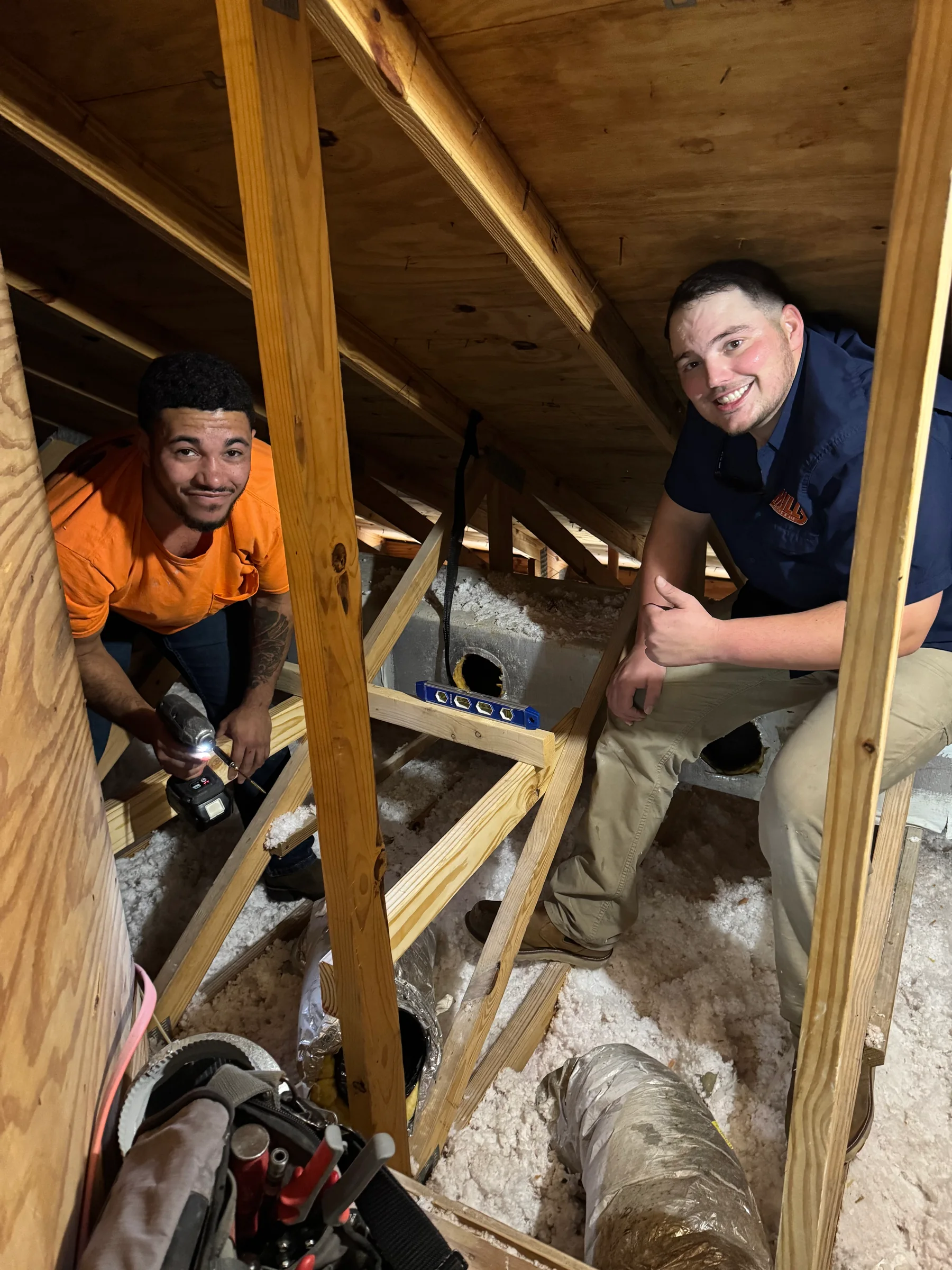
Duct repair addresses physical problems such as leaking connections, disconnected sections or damaged ductwork. For a Baker home, Mills can discuss inspection, airflow testing and repairs suited to the findings. Weak airflow or an uneven room is a reason to investigate, not proof of a duct defect. Sealing, reconnection, damaged-section replacement and insulation work are different possible parts of that conversation.
Start with the spaces you normally use. Is a bedroom different from the living room, or does the change affect several rooms? We want your everyday experience, not a guess about hidden ductwork.
Mention a sound or odor you notice during normal system operation. There is no need to remove a grille, reach into a vent or climb to follow the sound.
Name the affected room and whether nearby rooms feel different too. Duct measurements are not needed for the first conversation.
Tell us if the difference occurs during heating, cooling or both, and whether it is recent or longstanding.
Mention recent equipment work, renovation or changes in room use. That history is context, not evidence of the cause.
Those are different observations. A room may receive little noticeable air, or it may receive air that does not feel cool during cooling operation. You may notice both. Describe each rather than choosing a repair category yourself.
Duct condition can affect air delivery, but equipment and room conditions also matter. Tell us if the cooling concern affects the home more broadly. A duct repair should address a ductwork finding, not stand in for an unexplained equipment problem.
For a cooling-system concern alongside the room airflow issue, read about AC repair for Baker homes. That page explains the equipment-repair conversation rather than assuming the ducts are responsible.
Our duct-repair service includes inspection and airflow testing, with leak detection where appropriate. Ask us to identify the affected area and explain what was found. Access and duct condition matter when assessing and proposing work.
Sealing addresses an air leak. Reconnection or realignment addresses a section that has separated or shifted. A damaged or crushed section may call for replacement rather than sealing over it. Insulation work around exposed ducts is another distinct part of the scope.
A recommendation for one section does not automatically mean replacing the entire duct system. Ask why each step is needed and which concern it addresses. Keep any broader issue separate from the specific physical repair being considered.
Tell us where you notice dust or an odor and whether it seems connected with normal system operation. Household dust has several possible sources. An odor alone does not identify mold or prove a duct leak.
Physical repair is different from cleaning duct surfaces or applying a surface treatment. Sealing an air leak is also different from coating a duct's interior. Keep the purpose of proposed work clear, and leave inspection of concealed surfaces and unfamiliar material to a qualified professional.
If your question concerns duct surfaces rather than a physical connection or damaged section, our Baker duct treatment page explains that separate service conversation. Treatment is not a substitute for repair or an automatic next step for an odor.
You should be able to connect the finding to the proposed work. We can discuss the affected area and relevant checks without asking you to enter a concealed space. Keep these questions handy.
Ask for the defect's location and an explanation. Separate an observed connection or damaged section from concerns that still need evaluation.
Clarify whether the proposal covers sealing, reconnection, a replacement section or insulation. Ask which areas could be assessed and what remains outside the repair.
Discuss the checks relevant to the repair. Mills' sealing service includes post-sealing airflow testing. Share whether the original room concern persists.
For ongoing equipment care rather than correcting a particular duct defect, see HVAC maintenance for Baker homes. Maintenance and a defined duct repair have different purposes; do not assume one includes the other.
Baker is a service area for Mills Heating & Air, not an office location. Our Crestview address is 1455 S Ferdon Blvd a2, Crestview FL 32536. Share your Baker property address and, if you know it, the kind of system serving the affected rooms. You do not need to open equipment to find that information.
A short description is enough to start: which rooms feel different, when it happens and any sound or odor. We can discuss your address, equipment and duct-repair request together.
Call our crew at (850) 862-4796 to talk about your home.
Prefer to write down the details? Use our local contact form to describe your Baker duct concern.
Yes. Share your Baker property address and the rooms involved with Mills Heating & Air. We can discuss the request in relation to your home and equipment. Our office is in Crestview; Baker is a service area, not a separate branch.
No. A duct defect is one possible contributor, but equipment and room conditions can also matter. Describe what you notice during normal use. Inspection and appropriate testing help distinguish a physical duct issue from another cause.
Sealing addresses an air leak. A crushed, torn or otherwise damaged section may need different work, including replacement. Ask which section is involved and why the proposed approach fits its condition.
No. Describe what you notice in the rooms you normally occupy. Do not enter an attic or crawlspace, open ducts, handle insulation or adjust dampers to investigate. Leave access and assessment to qualified professionals.
Not automatically. Physical repair, cleaning and surface treatment are different scopes of work. Ask what is included and what finding supports it. Dust or an odor alone does not establish the need for any one service.
Ask which area was repaired and which checks applied. For sealing, discuss the relevant airflow testing. If the original room concern remains, describe it again rather than assuming another duct repair is the answer.
How can we help with your Baker home's airflow? Call Mills Heating & Air at (850) 862-4796. Bring the room observations you already have, and let's talk about the right question to investigate.
Have a question about your AC or heat? Planning a new system? Give the Mills crew a call and let’s talk about your Crestview home or business.