Duct treatment for your Baker home
Starts with the right questions.
An odor deserves a closer look, not an automatic chemical treatment.
If a smell returns when your system runs, tell us what you notice in your Baker home. We can discuss our duct-treatment package and the questions that come before authorizing it. Your duct materials, the proposed treatment surfaces and any moisture or damage matter more than choosing a treatment by name alone.
Safety comes first. Leave chemicals, duct access, damaged insulation, internal panels, wiring and refrigerant to qualified professionals. Do not spray into vents or disturb suspected mold. For suspected gas, smoke, fire or a carbon-monoxide alarm, leave and call 911 from a safe place. For suspected gas, do not use switches, phones or flames inside.
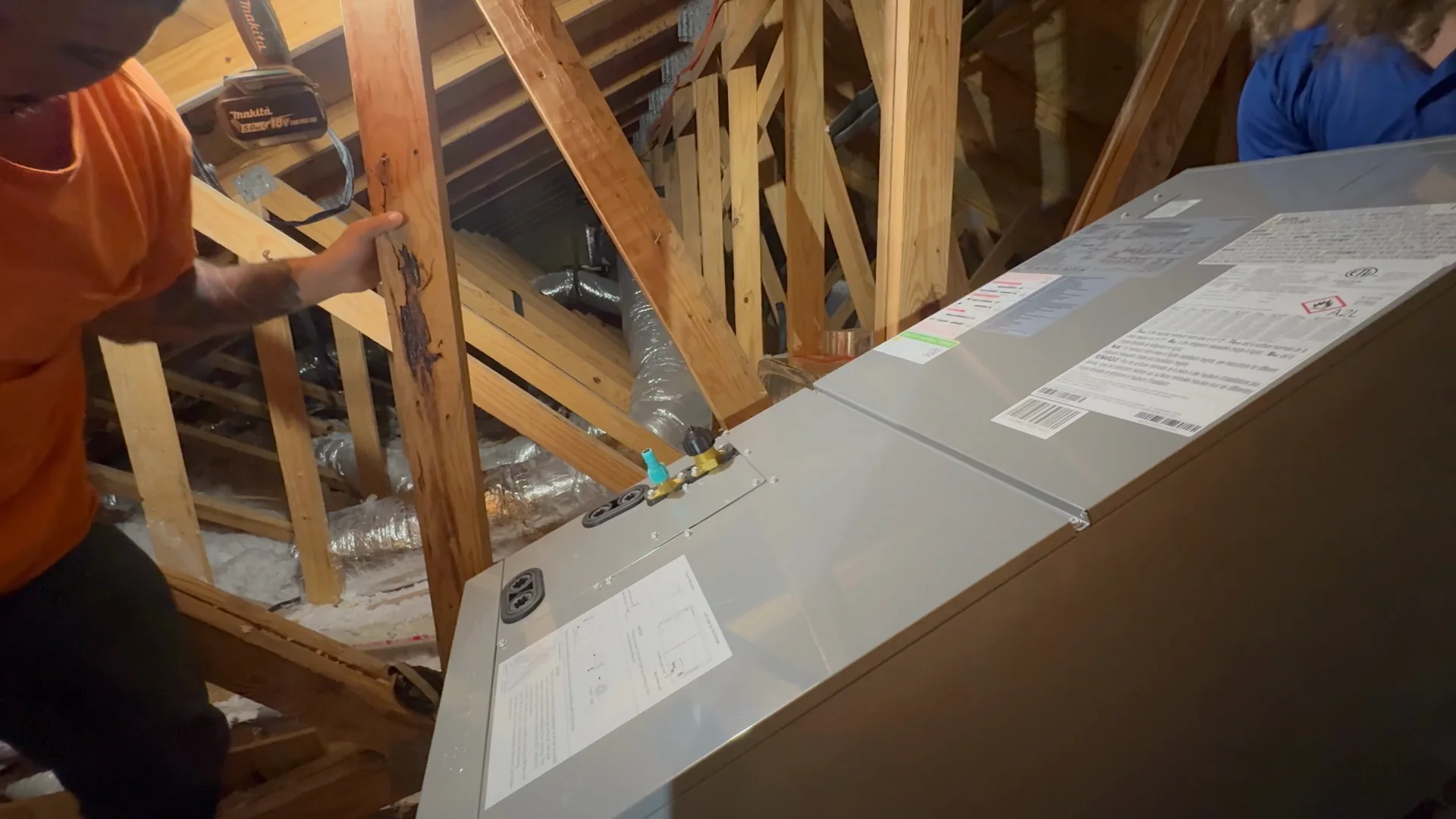
You can contact Mills Heating & Air about duct treatment for a Baker property. Our published package combines Rapid Recovery Treatment, Bio-Fresh Treatment and an inspection of one HVAC system. Share your address and equipment so we can discuss the applicable scope. Treatment is not duct cleaning, physical repair or mold remediation.
Tell us when the odor appears
Does the smell appear at the start of a cooling cycle, continue while the system runs, or remain after it stops? Tell us which occupied rooms are affected and whether it seems strongest near a register. Describe the pattern without taking a vent apart or entering the duct area.
Mention any recent water problem, work on the home or previous treatment. If you already have a product name or service record, share it. These details help frame the conversation, but a musty smell or residue alone does not identify mold or prove that the duct system is the source.
Separate water and damage from treatment
A loose duct connection, damaged section or water source needs its own solution. A treatment cannot reconnect ductwork or correct a leak. We want those concerns in the discussion before you approve work intended to address an odor.
EPA guidance emphasizes keeping moisture out of ducts. Wet or visibly moldy insulation needs evaluation by a qualified professional, not chemical treatment assumed to restore the material. Persistent room humidity is also a different question from water entering a duct or equipment cabinet.
If the concern is a loose connection or damaged section, read about duct repair for a Baker home. That discussion addresses physical duct condition rather than treatment.
For ongoing indoor humidity concerns, explore whole-home dehumidification in Baker as a separate equipment conversation. It is not a substitute for correcting a leak.
What our published package includes
Our published duct-treatment package lists Rapid Recovery Treatment with a unit set at the return vent, followed by Bio-Fresh Treatment. It also lists a maintenance-style inspection of one HVAC system, including a drain-line flush and drain cleaner. Ask us to confirm the current scope for your equipment.
Those names do not explain every surface or method proposed for your home. Before authorizing treatment, ask where each step will be used and what it is intended to address. Do not assume mechanical debris removal, insulation replacement, an installed purifier or separate repairs are included.
Match the product to the surface and purpose
Ask to see the label for the exact product proposed. EPA registration covers specified uses; it is not an endorsement or a recommendation to treat ducts routinely. The product name alone is not enough to establish that a particular application fits your system.
Which material would be treated?
Ask us to identify the proposed surfaces and whether they include internal insulation. EPA says no chemical biocides are currently registered for fiberglass duct board or fiberglass-lined ducts. Do not assume one product fits every duct material.
What purpose does the label support?
The manufacturer's Bio-Fresh cd label distinguishes ductwork deodorizing from microbial-control directions for coils, drip pans and associated parts. Ask which purpose applies to the work proposed, rather than treating those separate label uses as a whole-duct disinfection claim.
What preparation and application are proposed?
Ask how the professional will follow the label, whether preparation is required and which areas are excluded. A product label does not establish that our package includes every listed use. You should not apply the product yourself.
Discuss precautions before treatment begins
Tell us about children, pets and household sensitivities before work is proposed. Ask for the applicable precautions for each treatment step, including occupancy, ventilation and re-entry guidance. Do not assume that a general statement about staying home answers those questions for every household or product.
If a precaution or proposed application is unclear, ask for an explanation before giving permission. Keep treatment chemicals and equipment with the qualified professional. We are discussing HVAC work, not diagnosing a medical condition or promising a health outcome.
Review the inspection and any next step
The package's one-system inspection keeps equipment and drainage questions part of the conversation. If your home has more than one HVAC system, identify which system is being discussed rather than assuming the package covers them all.
Ask us to distinguish observations, proposed treatment and any separate repair recommendation. Weak airflow needs its own assessment; treatment should not be assumed to correct it. If an odor returns, describe when it returned and any new water or equipment concern instead of assuming another application is the answer.
For a separate discussion about routine equipment care, see HVAC maintenance for Baker homes. Confirm that scope separately from the check-up described in the duct-treatment package.
GOOD QUESTIONS.
CLEAR ANSWERS.
Should I request treatment just because one room smells musty?
Not automatically. Tell us where the smell appears, when it changes and any known water issue. An odor does not confirm mold or identify its source. The useful first question is what needs evaluation, not which treatment to repeat.
Will this service remove dust and debris from my ducts?
Do not assume it will. Our published package describes treatment steps and a one-system inspection, not mechanical removal of duct deposits. Ask what work is proposed for the material and condition. Treatment and duct cleaning are different services.
Can a registered product be used on every duct surface?
No. The exact label use and material matter. EPA says no chemical biocides are currently registered for internally insulated duct systems. Ask the professional to identify the surface and explain the applicable label before authorizing chemical treatment.
Does the Bio-Fresh name mean my ducts will be disinfected?
No. The manufacturer label separates ductwork deodorizing from microbial-control uses on specified equipment parts. We do not promise whole-duct disinfection, mold remediation or health effects. Ask which labeled purpose and surfaces apply to the proposed work.
Should my family and pets stay home during the work?
Ask before approving the work. Occupancy, ventilation and re-entry precautions depend on the proposed steps and applicable instructions. Tell us about your household's concerns. Do not rely on a general stay-home statement as permission for every situation.
What should I provide when calling about a Baker property?
Share your address, the number of HVAC systems and the odor or duct concern. Mention known water problems and previous treatment records. Our office is in Crestview, not Baker. We can discuss which proposed scope applies to your equipment and concern.
Give Mills Heating & Air a call at (850) 862-4796 and tell us about your Baker home. Our Crestview address is 1455 S Ferdon Blvd a2, Crestview FL 32536. Let's talk through the concern, the proposed work and the questions you want answered before choosing treatment.