For airborne particles
Ask how existing filtration handles dust, pollen or pet dander and whether a compatible filter improvement deserves consideration.
 (850) 862-4796 Request service
Tell us what you notice in your indoor air. Let's talk about what an installed option can address and how it fits your heating and cooling system.
At Mills Heating & Air, we help you discuss whole-home air-treatment options for your Baker home. Start with the rooms involved, your existing equipment and what has changed. We can talk through system fit, professional installation and ongoing care.
Safety comes first. Leave chemicals, internal panels, wiring and duct access to qualified professionals. Do not handle unfamiliar UV or electronic components. For fire, suspected gas or a carbon-monoxide alarm, leave and call 911 from a safe place. For suspected gas, do not use switches, phones or flames inside. A purifier is not an emergency-safety device.
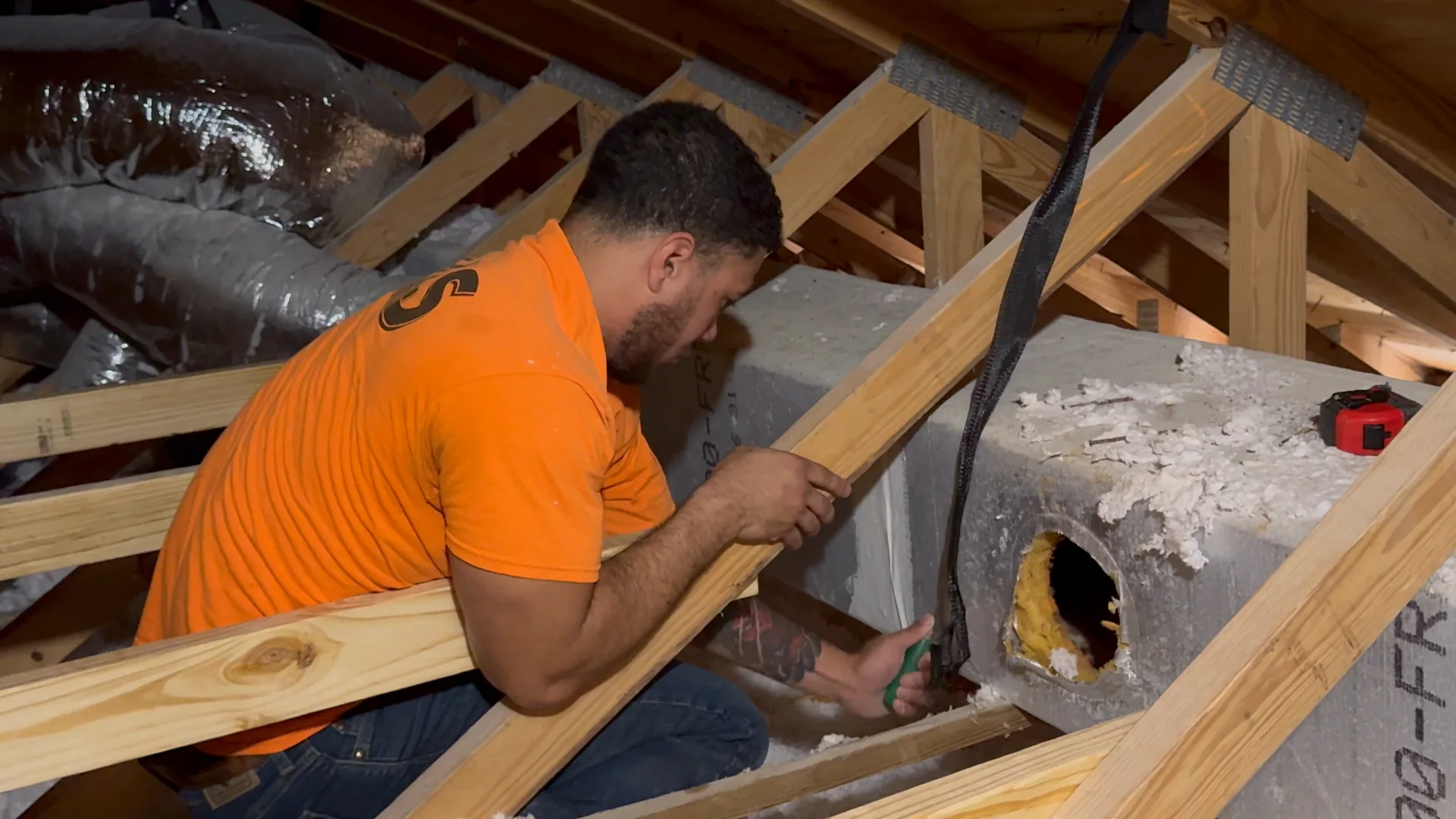
Whole-home air purification for a Baker home means an HVAC-connected air-treatment option, not simply a portable room purifier or a new basic filter. The selected equipment determines its capabilities. No single device removes every pollutant, and purification does not replace source correction, suitable ventilation or moisture control.
Dust on a shelf and an odor after cooking do not tell us the same thing. Some pollutants are particles; others are gases. Ordinary HVAC particle filters are not designed to remove every gas that carries an odor. Ask which concern a proposed option addresses.
We want to hear where the problem occurs and when it returns. An odor alone does not identify its source or prove you need a purifier. Cleaning, source correction or appropriate ventilation may be part of the answer.
Ask how existing filtration handles dust, pollen or pet dander and whether a compatible filter improvement deserves consideration.
Describe the activity or location associated with the smell. Ask what the proposed technology can address and what remains outside its capabilities.
A portable HEPA, or high-efficiency particulate air, cleaner filters particles in the room or area it is sized to serve. Your central HVAC filter captures particles from passing air. An installed whole-home purifier can use a different treatment process. These descriptions are not interchangeable.
Some in-duct equipment uses light-based or electronic treatment rather than a particle filter. Ask how a proposed option works alongside your filter. Review its intended pollutants, operating requirements and limitations instead of assuming whole-home means equal treatment in every room.
Ask about ozone emissions and other byproducts for the specific equipment. EPA advises against devices that intentionally produce ozone. A registration, label or manufacturer claim is not a blanket endorsement of effectiveness or suitability for your home.
Tell us whether your home has a central ducted system, room units or mixed equipment. An in-duct device needs compatible ductwork. The existing filter arrangement and airflow also matter.
Use records you already have to describe your HVAC equipment and any air-treatment device. You do not need to enter an attic or open a cabinet.
Ask how the device's requirements match your system and whether its installation location allows access for later professional care.
Do not force a higher-rated filter into the wrong slot. Ask what your system accommodates before changing filter type or thickness.
For uneven airflow or a suspected duct problem, our Baker duct repair page explains the separate repair conversation. Purification does not repair a damaged duct.
Tell us about musty smells, visible dampness or known leaks before focusing on purification. A purifier does not correct a moisture problem, repair a leak or provide mold remediation. Changing the smell would not establish that the underlying problem is resolved.
If moisture is the main issue, ask what is causing it and whether dehumidification is appropriate. Avoid masking an unexplained smell with sprays or adding chemicals to HVAC equipment.
For excess indoor moisture, read about whole-home dehumidification for Baker homes. That service concerns moisture control, not a claim that purification and dehumidification do the same job.
When an HVAC-connected option fits the discussion, we can explain professional installation and system testing. Ask for the proposed equipment's name, intended use and installation requirements. Connect your concern to a compatible option, not just a broad cleaner-air claim.
Before approving work, ask which tasks are included, how operation will be checked and what instructions you will receive. An operation check confirms equipment function; it does not prove every indoor pollutant has been removed.
Care depends on the selected device. Ask which filters or other components need attention, who should perform the work and which manufacturer instructions apply. There is no single replacement interval for every purifier. Keep its equipment information for future questions.
Continue compatible HVAC filter care. If an indicator changes, note what you observe without opening anything and share the details. Do not assume every purifier is repairable or that ordinary HVAC upkeep includes every air-treatment component.
Our Baker HVAC maintenance page covers broader system care. Ask separately which purifier tasks belong in the proposed work.
Yes. Share your Baker property address, indoor-air concern and equipment details with Mills Heating & Air at (850) 862-4796. Our Crestview location is at 1455 S Ferdon Blvd a2, Crestview, FL 32536. We can discuss the appropriate service for your home and system.
Do not assume so. Some installed devices use a different treatment process while the HVAC filter still captures particles. Ask how the proposed equipment works with your filter and continue the compatible filter care described in your equipment instructions.
No. Particle filtration and treatment of gases are different jobs, and no single device removes every pollutant. Describe recurring odors and dust so we can discuss whether filtration, source correction or another approach deserves attention first.
Not automatically. Compatibility depends on the equipment arrangement, ductwork, airflow and installation requirements. A portable unit or ductless system is not an in-duct whole-home setup. Ask about a suitable approach for your existing equipment before selecting a product.
Do not change the fan setting solely on that assumption. HVAC filters work when air passes through them, but longer fan operation can affect electricity use and humidity control. Ask how the purifier operates with your system and follow the applicable guidance.
Follow the specific manufacturer's instructions rather than a universal schedule. Ask about replacement components, indicators and professional service access before installation. Keep the device information with your HVAC records. Internal electrical, UV and duct work belongs with a qualified professional.
Ready to talk through your indoor-air concern? Call Mills Heating & Air at (850) 862-4796 with your Baker address and existing equipment details. We'll start with what you notice and the questions that matter for your home.
Have a question about your AC or heat? Planning a new system? Give the Mills crew a call and let’s talk about your Crestview home or business.